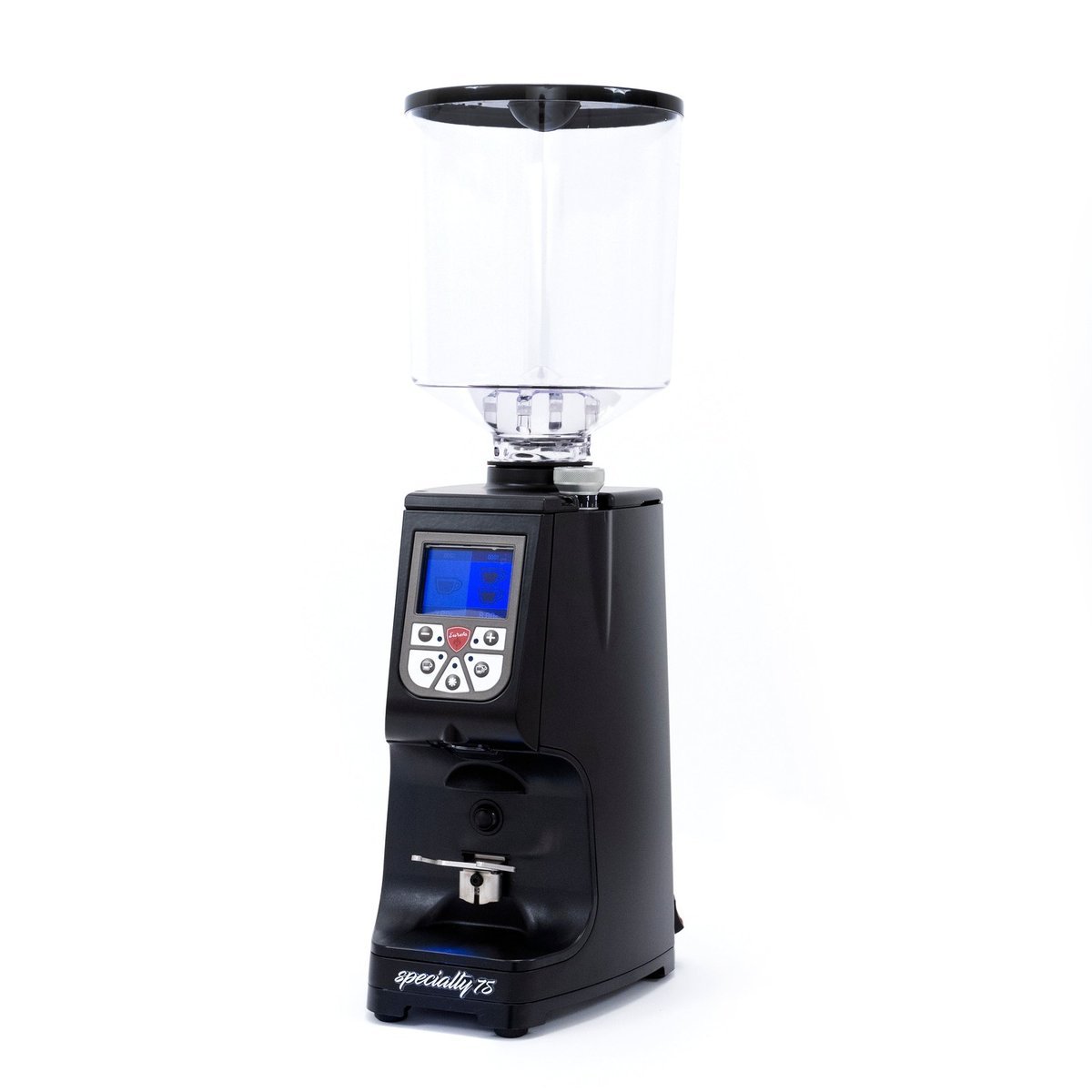
Espresso extraction is grind-dependent. A capable machine fed inconsistent or heat-damaged grounds will produce sour, bitter, or channeling shots no matter how expensive the group heads are. Budget and specify the grinder with the same care you give the espresso machine.
What “good” looks like for café use
Commercial espresso grinders emphasize stable particle distribution, fast on-demand dosing, and thermal management during rushes. Larger burrs generally grind faster with less heat at volume. Look at burr diameter, motor duty rating, and whether the workflow is on-demand (dose into portafilter) or doser-based for your bar style.
Retention, waste, and single origin swings
Grind retention affects how quickly you can change coffees and how much you waste when dialing in. High-retention grinders can be fine for a single house espresso that rarely changes; lower retention helps when you rotate origins or run a guest espresso. Align the grinder choice with your menu plan.
Pairing with the machine
Match grinder throughput to group count and peak drinks per hour. A 3-group bar with one undersized grinder creates a bottleneck that no machine upgrade fixes. Many busy cafés run a primary espresso grinder plus a secondary for decaf or a second blend. Explore options in our coffee grinders category and include them on the same quote as your machine.
Home and light commercial notes
Home baristas benefit from stepless or fine-step adjustment and low retention for single-dose workflows. Light commercial or office settings may prefer simpler on-demand grinders that staff can operate with less training. Either way, buy the grinder for the coffee you serve most — not only for Instagram aesthetics.
Dial-in and maintenance
Plan for burr seasoning, regular cleaning, and eventual burr replacement. Keep a scale on the bar for dose control. When you inquire with us, tell us your machine class and daily volume so we can suggest grinder pairings from the catalog — still inquire/quote only, with reference pricing on product pages.
Flat vs conical burrs (practical view)
Both geometries can produce excellent espresso. Flat burrs are common in many specialty cafés; large conical grinders are legendary for high-volume speed. Taste preferences are real but secondary to matching capacity, serviceability, and spare-burr availability in your market. When you inquire, tell us your target drinks per hour rather than only a burr ideology.
Placement on the bar
Give the grinder a stable surface at a height that protects barista wrists. Keep it close to the espresso machine to shorten the dosing path. Plan power outlets so cords are not trip hazards. If you run two grinders, label them clearly for guests and new staff.
Budget allocation rule of thumb
Many consultants suggest not starving the grinder budget relative to the machine. Exact ratios vary, but a premium machine with a weak grinder is a common regret. Put grinders on the same inquiry as machines so total bar cost is visible before you commit.
Ready to compare models? Open the grinders category, shortlist two options that match your peak volume, and include them with your machine on one quote request.
Buying for a café? Read how to choose a commercial coffee grinder.