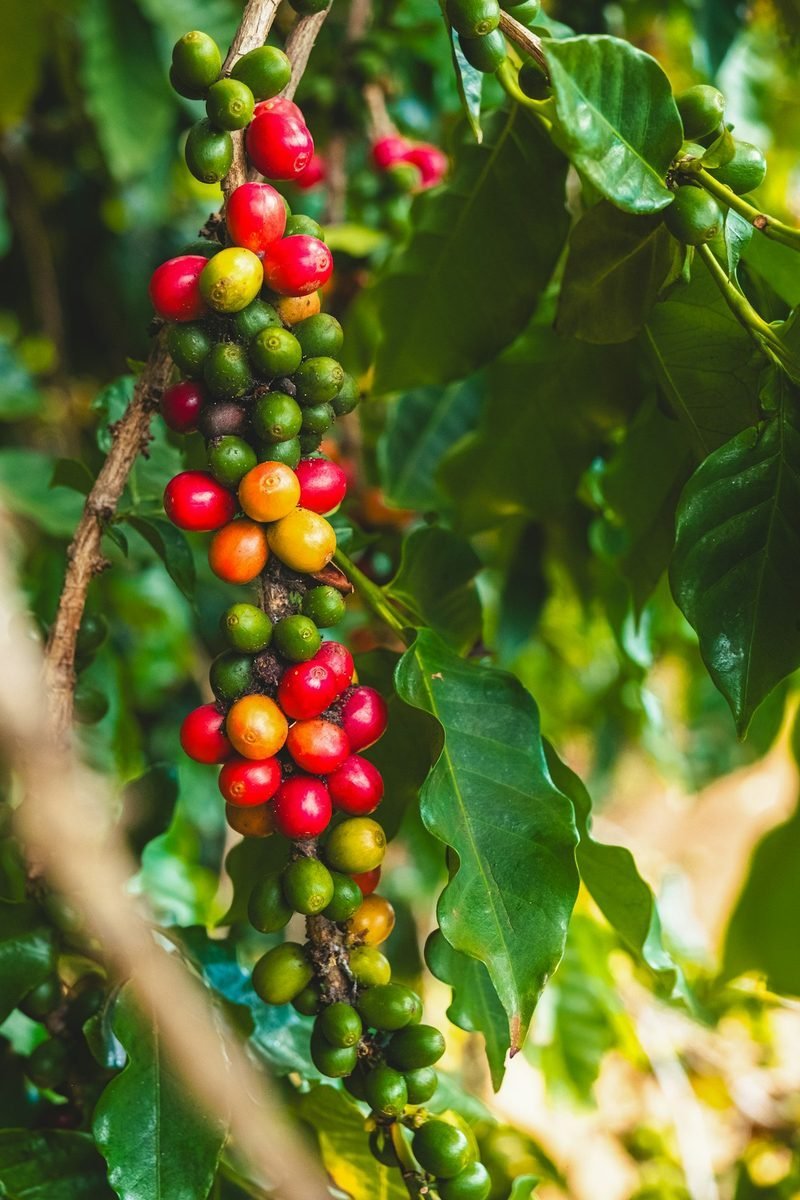
Almost all of the coffee traded in the world comes from two species: Coffea arabica (Arabica) and Coffea canephora, whose best-known variety is Robusta. If you roast, blend or import coffee, the choice between them shapes flavour, price, supply and how the coffee behaves in the roaster. This guide compares the two from a green coffee buyer's point of view — what the beans look like, where they grow, how they taste and where each one fits.
The plants and where they grow
Arabica generally grows best at higher altitudes in the tropics, in cooler conditions with moderate rainfall. It is more sensitive to heat, frost and diseases such as coffee leaf rust, which makes it more demanding to farm. Arabica plants are self-pollinating, so varieties stay relatively true to type.
Robusta tolerates heat, lower altitudes and humidity better, and is generally more resistant to pests and disease — hence the name. Robusta plants usually need cross-pollination, which produces more genetic variation between plants. Robusta trees typically give higher yields per hectare than Arabica.
Brazil is the world's largest coffee producer and a major source of Arabica (it also grows significant Robusta, called Conilon there). Vietnam is the largest Robusta producer. Colombia is known for washed Arabica. In Central and West Africa, countries such as Cameroon grow both: Arabica mainly in the cooler western highlands and Robusta more widely at lower elevations.
Telling the beans apart
You can often distinguish the two by eye in a green sample:
- Shape: Arabica beans tend to be more oval and elongated, with a curved, S-shaped centre cut. Robusta beans are usually smaller and rounder, with a straighter centre cut.
- Colour: both range from bluish-green to yellowish-green depending on processing and age, so colour alone is not a reliable guide.
- Grading: both are graded by screen size (bean size) and defect count, but the grading systems and grade names differ by origin and species. Always ask the exporter which standard a grade refers to.
Chemistry and flavour
The species differ in composition, and those differences show up in the cup:
- Caffeine: Robusta typically contains roughly twice as much caffeine as Arabica (commonly cited figures are around 1.2–1.5% for Arabica and 2.2–2.7% for Robusta, by dry weight).
- Sugars and lipids: Arabica generally contains more sugars and more oils, which contribute to sweetness, acidity and aromatic complexity.
- Chlorogenic acids: Robusta usually has more, which contributes to its bitterness and stronger, earthier character.
In the cup, good Arabica is associated with sweetness, brighter acidity and a wide range of fruit, floral, chocolate and nut flavours depending on origin and processing. Robusta tends to be fuller-bodied, more bitter and lower in acidity, with flavours often described as woody, earthy, cocoa-like or grain-like. High-quality, carefully processed Robusta — sometimes sold as "fine Robusta" — can be clean and pleasant, and there is growing interest in it among specialty roasters.
How each is used
Arabica dominates specialty coffee, single-origin filter and espresso, and most premium blends.
Robusta is widely used in:
- Espresso blends, especially in the Italian tradition, where a portion of Robusta adds body, crema and a stronger bitter-chocolate finish, particularly in milk drinks.
- Instant (soluble) coffee, where its yield and strength are valued.
- Value and commercial blends, where it helps manage cost.
- Traditional coffee cultures such as Vietnamese coffee, typically brewed strong and often served with sweetened condensed milk.
Many roasters use both: an Arabica base for flavour and a measured share of Robusta for body and crema. The right ratio is a recipe decision that you should test by cupping and by pulling shots on your own equipment.
Roasting differences
Because the beans differ in size, density and composition, they rarely roast identically. Robusta's smaller, rounder beans and different sugar content mean it often develops colour differently from Arabica at the same time and temperature. When blending, many roasters roast each component separately (post-roast blending) and combine them afterwards, so each can reach its own ideal development. If you blend before roasting, test carefully for uneven development.
Pricing and markets
The two species trade on separate futures markets: Arabica on the ICE "C" contract in New York, quoted in US cents per pound, and Robusta on the ICE Robusta contract in London, quoted in US dollars per tonne. Robusta has historically traded at a lower price than Arabica, but the gap moves with harvests, weather and demand in both producing regions, so check current market conditions rather than relying on a fixed rule. Specialty Arabica and fine Robusta lots are often priced on quality rather than strictly against the futures.
Which should you buy?
- Specialty roaster or single-origin focus: Arabica from origins whose flavour profile fits your menu, with fine Robusta as an optional experiment.
- Espresso blends for milk drinks: an Arabica base with a tested share of good Robusta for body and crema.
- Soluble, value or high-strength products: Robusta is often the core component.
- Importers and distributors: consider carrying both, as demand comes from different customer segments.
Whatever you choose, ask for pre-shipment samples and evaluate them by grading and cupping before you commit to a full lot. Our step-by-step guide on how to import green coffee beans explains samples, contracts, Incoterms and documents.
Origins we can quote
We handle wholesale inquiries for both species:
- Robusta: Cameroon Robusta and Vietnam Robusta
- Arabica: Cameroon Arabica, Brazil Arabica, Colombia Arabica and Ethiopia Arabica
Specifications, grades, packing and quantities are confirmed per inquiry, and we do not publish green coffee prices. Use the wholesale green coffee quote form to tell us your species, origin, volume and destination. If you also roast or serve espresso, our grinders and commercial espresso machines can be added to a separate equipment quote request.