Two espresso machines can share a group head, a portafilter size and a similar price, yet behave very differently once you start pulling shots back-to-back and steaming milk between them. The biggest reason is the boiler layout — how the machine heats water for brewing and how it makes steam. This guide explains the common designs in plain terms so you can read a spec sheet and know what it means for your bar, your kitchen or your office.
Why boiler layout matters
Espresso brewing water is typically held somewhere around 90–96°C, while steam needs water well above boiling under pressure. One container of water cannot sit at both temperatures at the same time, so every machine solves the problem in its own way. The solution affects four things you will notice every day: how stable brew temperature is, whether you can brew and steam at once, how long the machine takes to recover between drinks, and how long it takes to heat up in the morning.
Single boiler (dual-use)
A single-boiler home machine uses one small boiler for both jobs. You brew at brew temperature, then flip a switch and wait for the boiler to heat up for steam. After steaming, you often need to cool it back down before the next shot. The Gaggia Classic Pro is the classic example: a well-loved learning machine with a commercial-style steam wand and a 58mm portafilter.
Good for: learning espresso, mostly straight shots, one or two milk drinks at a time. Watch for: waiting between brewing and steaming; not suitable for any queue of customers.
Note that "single boiler" means something different in commercial machines. The Rancilio Classe 20 SB 2 Group, for example, is listed with a single boiler of roughly 11 litres combined with Rancilio's Steady Brew system for thermal stability. Many large commercial single-boiler machines route brew water through heat exchangers inside that boiler, which leads us to the next design.
Thermoblock and thermocoil / ThermoJet systems
Instead of a boiler, these machines push water through a heated metal block or coil as it is needed. Heat-up is fast and energy use is low, which is why many compact home machines use them. The Breville Barista Express Impress (thermocoil) and Breville Barista Pro (ThermoJet) both work this way. The Ascaso Steel DUO PID uses two thermoblocks so brewing and steaming have separate heaters, with heat-up listed at around two minutes.
Good for: home kitchens where speed to first coffee matters. Watch for: lower steam power and output than a large boiler; not designed for café duty cycles.
Heat exchanger (HX)
A heat-exchanger machine keeps one larger boiler at steam temperature. Brew water does not come from that boiler directly; it passes through a tube (the heat exchanger) running through the hot boiler, where it is flash-heated on the way to the group. You can brew and steam at the same time, and the big steam boiler gives strong milk performance.
The trade-off is temperature management. Water sitting in the heat exchanger can overheat while the machine idles, so many HX users run a short "cooling flush" before pulling a shot. Modern HX machines with PID control on the boiler make this more predictable. In our catalog, the Rocket Appartamento TCA (1.8L HX), Quick Mill Andreja Premium (1.8L HX, E61 group) and ECM Technika V Profi PID (2.1L HX, rotary pump, PID) are all heat-exchanger designs, and the single-group ECM Mechanika Max pairs HX with a rotary pump in a compact commercial-capable chassis.
Good for: milk-heavy home use and entertaining, light commercial service, users who are happy to learn a flushing routine. Watch for: brew temperature depends partly on technique and idle time.
Dual boiler
A dual-boiler machine has two separate boilers: a smaller one dedicated to brew water and a larger one for steam. Each has its own temperature control (usually PID), so brew temperature can be set precisely and stays independent of steaming. You can brew and steam at the same time without flushing.
Examples in the catalog include the Breville Dual Boiler, Rancilio Silvia Pro X, Lelit Elizabeth PL92T, Profitec Pro 700 (listed with 0.75L brew and 2.0L steam boilers, rotary pump and E61 group) and the Rocket R58 Cinquantotto, which can run plumbed or from the tank.
Good for: anyone who wants repeatable shots and changes coffees often, serious home baristas, small offices, tasting labs. Watch for: more parts to maintain and descale, and steam capacity that is still home-scale on most single-group models.
Saturated groups
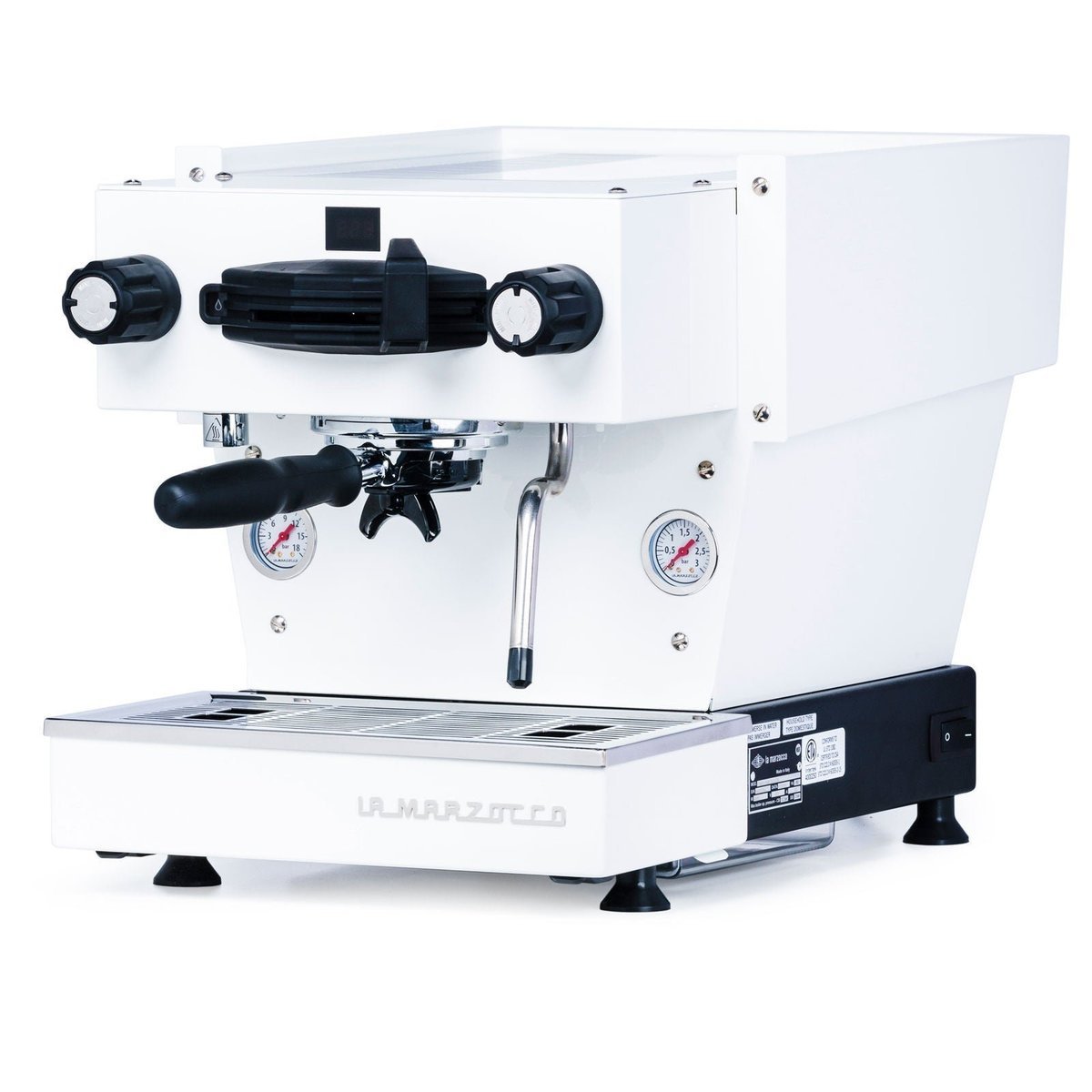
"Saturated group" describes how the group head is heated rather than a boiler count. In a saturated design the group is directly connected to the brew boiler so hot water fills it, keeping the group at the same temperature as the boiler. This is a hallmark of La Marzocco machines such as the Linea Mini, the GS3 MP and the café-standard Linea PB 2 Group, all of which combine dual boilers with saturated groups. The single-group Rocket R Nine One also uses a saturated group.
Multi-boiler and independent group boilers
At the top of the commercial range, some machines give every group its own brew boiler, plus a separate steam boiler. This lets each group run at its own temperature — useful if one group pulls a lighter single origin and another a darker house blend — and limits how much one busy group affects its neighbours. The Synesso MVP Hydra is built around independent group boilers, and the Rancilio Specialty RS1 and Sanremo Café Racer are multi-boiler designs.
Good for: specialty cafés with rotating espresso offers and high standards for temperature consistency. Watch for: higher cost, power demand and service complexity.
Quick comparison
- Single boiler (home): lowest cost, brew or steam (not both), long waits between modes.
- Thermoblock / thermocoil: fastest heat-up, compact, modest steam.
- Heat exchanger: brew and steam together, strong steam, needs a flushing routine.
- Dual boiler: independent, PID-controlled brew temperature, brew and steam together.
- Multi-boiler / per-group boilers: per-group temperature control for high-volume specialty service.
How to choose
Start with the drinks, not the boiler. If most of what you make is milk-based and you make several in a row, steam capacity and the ability to brew while steaming matter more than fine brew-temperature control — a heat exchanger or dual boiler fits. If you mostly drink straight espresso and like to switch coffees, a dual boiler with PID gives you the most repeatable results. If you are serving customers, boiler layout is only one part of the decision; group count, power supply and plumbing come first, as covered in our guide to choosing an espresso machine for your café and our home vs commercial comparison.
Whatever you choose, more boilers means more surfaces where scale can build up. Plan water treatment from day one — see the water filtration guide — and follow the manufacturer's maintenance schedule from our maintenance checklist.
Next step
Shortlist two or three machines from espresso machines or commercial espresso machines, note the boiler type on each product page, and send them on one quote request with your daily drink count and milk-drink share. We confirm configuration, voltage and availability when we reply — this is an inquire/quote storefront with no online checkout.