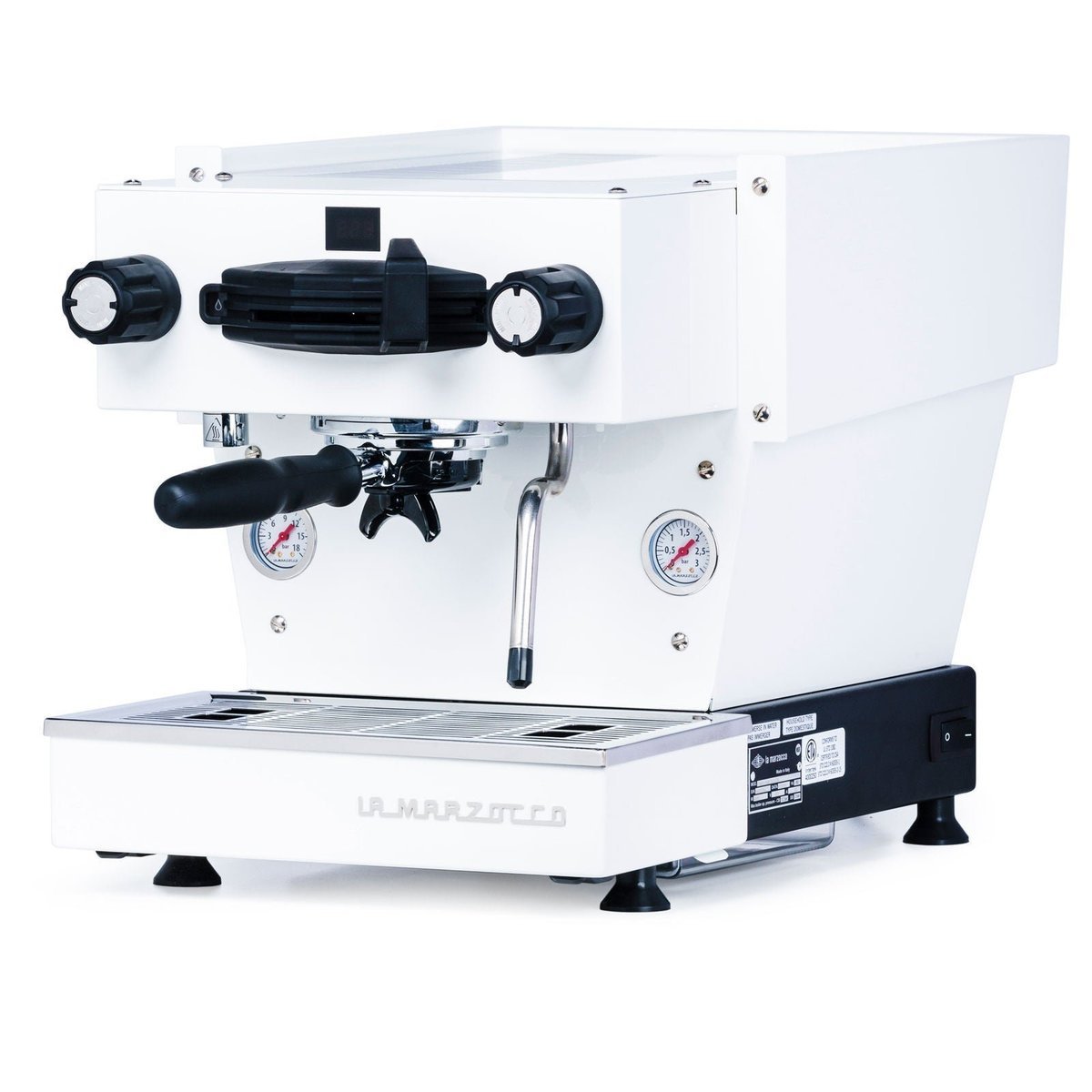
"How many groups do I need?" is one of the most important questions to answer before buying a commercial espresso machine. Buy too small and your baristas will be waiting on the machine during the morning rush. Buy too big and you pay for a larger machine, more counter space and more electricity than your café will ever use. In this guide we explain what a group head is, how 1, 2 and 3 group machines differ, and how to match the size of the machine to your café.
What a group head is
The group head is the part of the machine where the portafilter locks in and hot water is pushed through the coffee. Each group can pull one shot at a time, either a single or a double, depending on the basket. So a 2 group machine can brew two portafilters at once, and a 3 group machine can brew three.
More groups means more coffee at the same moment. But the number of groups is only part of the story. The boiler size, the steam power and the number of baristas working the bar all affect how many drinks you can actually serve in an hour. Our guide to espresso boiler types explains how boiler design affects this.
1 group machines
A single group commercial machine is built for light, steady service. It suits places where coffee is part of the offer but not the main business, such as:
- Small restaurants that serve coffee after meals
- Offices, showrooms and small hotels
- Food trucks, kiosks and pop-ups where space and power are limited
- Specialty bars that make a small number of carefully prepared drinks
The main limit is that one group means one portafilter at a time, and single group machines usually have smaller boilers, so steam power can drop off during a run of milk drinks. If you expect a rush, even a short one, a 1 group machine can become a bottleneck. An example from our range is the Slayer Espresso V3 Single Group.
2 group machines
The 2 group machine is the standard choice for most cafés, and it is the size we are asked about most often. It lets one barista work comfortably, pulling two drinks at once, or two baristas share the machine during busy periods. Two group machines usually have larger boilers and stronger steam than single group models, which matters for milk-based drinks like lattes and flat whites.
A 2 group suits:
- Neighbourhood cafés and coffee shops
- Bakeries and brunch spots with steady morning trade
- Restaurants with a busy coffee service
- Hotel lobby and breakfast bars
Popular 2 group options in our range include the La Marzocco Linea PB 2 Group, the Nuova Simonelli Appia Life 2 Group, the Rancilio Classe 20 SB 2 Group and the Victoria Arduino Black Eagle 2 Group.
3 group machines
A 3 group machine is for high-volume bars where two or three baristas work at once. Typical settings include:
- Busy city-centre cafés with long queues at peak times
- Train stations, airports, universities and stadiums
- Large hotels and event venues
- Flagship stores for coffee chains
A 3 group machine needs more counter space, a bigger electrical supply and more water, so check your site before you commit. It also costs more to buy and run. If your trade is busy only for a short window, a well-run 2 group with a good grinder setup may serve you better. Examples include the La Marzocco Linea PB 3 Group and the Nuova Simonelli Appia Life 3 Group.
How to size the machine for your café
Think about your peak hour, not your daily total
A café that sells a lot of coffee spread evenly across the day needs less machine than one that sells the same amount in a two-hour morning rush. Estimate how many drinks you expect to make in your busiest hour, and size the machine for that.
Count your baristas
As a general rule, plan for one group per barista working the machine at the same time, with a 2 group as the usual minimum for a café where coffee is the main product. If you will regularly have two baristas on espresso, a 3 group gives each person room to work.
Consider your menu
Milk drinks put more demand on the steam boiler than straight espresso. If most of your sales are lattes and cappuccinos, look closely at boiler size and steam wand count, not just the number of groups.
Check space, power and water
Measure your counter, including room for grinders and a knock box. Commercial machines, especially 2 and 3 group models, usually need a dedicated electrical circuit, a plumbed water supply and a drain. Ask an electrician and plumber to check your site against the machine's specifications before delivery. Good water treatment also protects your machine. See our water filtration guide and the water filtration products we stock.
Plan for growth
A commercial espresso machine is a long-term purchase. If you expect your trade to grow, it can make sense to buy one size up rather than replace the machine in a year or two.
Do not forget the grinder
The machine can only work as fast as your grinders. A busy 2 or 3 group bar often runs two grinders, one for the house espresso and one for decaf or a guest coffee. Browse our commercial grinders, such as the Mazzer Robur S Electronic, and read why the grinder matters.
Our advice
For most cafés, a 2 group machine is the right place to start. Choose a 1 group if coffee is a side offer and space or power is tight. Choose a 3 group if you regularly have two or more baristas on the machine at the same time.
Opening a new site? Our café equipment checklist covers everything else you will need. You can browse all commercial espresso machines, look at our commercial equipment packages, or tell us about your café on the quote form and we will recommend a machine size. Buying for several sites? See our wholesale and trade accounts.